10 August 2006

Printing On Water


When I started this blog, most of my posts were about cool, weird, surprising technology... stuff that I might have otherwise distributed in an email to a select few people. Since that time, it's become a bit more reflective & business/life oriented, but I figure it's time to once again check in on the world of strange technology you've never heard of.

Check out this device - it uses waves to "print" letters on the surface of water.

Why? For sheer amusement, of course! I'd love to have one in my back yard!

09 August 2006

The Seven-Day Weekend

As I've probably mentioned before, I make it a point to not work long hours. I tend to come in early and leave early, and frankly I'm not too picky about the coming in early part...

At the risk of incuring a shoulder injury by patting myself on the back too vigorously, I'll point out that as far as I can tell, I'm also more productive than most of my peers (despite the occasionally abbreviated hours - or maybe because of them?)

My own little correlary to Parkinson's Law (work expands to fill the time allotted) goes like this: Work is compressible. If I really want to get out of the office early, I can get all my stuff done early. If I expect to stay late, I probably won't accomplish that much more...

I mention all this because I'm reading a wonderful book by Ricardo Semler, titled The Seven-Day Weekend. He points out that if we can learn how to read work email on a Sunday afternoon, we should be able to figure out how to go see a movie with our spouse on a Wed afternoon. And he backs it up with decades of real-world / real-work experience. Amazing book - I can't put it down.

So, it's currently 2:30 on a beautiful Wednesday. I'm going home now. Gonna take the kids to a park & play. And it's been a very productive day.

03 August 2006

Colbert on Wikipedia

In case you missed The Colbert Report's commentary on wikipedia, you can slip on over to YouTube and watch (it's about 4 minutes long). Then go check out the Wikipedia entry on Elephants, but don't bother trying to change the content to say the elephant population is increasing - they've locked the page down.

I see this as one more piece of evidence of Wikipedia's value, strength and secure place in the constellation of human knowledge repositories. The fact that Colbert refered to it shows how popular it is. The fact that the vandalism he tried to incite was nipped in the bud shows how resilient it is. And the discussion page associated with the Elephant entry shows how thoughtful, intelligent and fun-loving Wikipedians can be.

Of course, I had a positive opinion of Wikipedia already, but this really helps to confirm it.

02 August 2006

Meet The Mad Pigeon


I just got a note from a very cool blogger who also happens to be an instructor at the Air Force Academy. He goes by the name The Mad Pigeon, and he got in touch with me after reading the Punk Rock article Quaid & I wrote.

It's always fun to meet a punk-rocking, status-quo defying, conformity-rejecting rogue operator... and knowing that he's teaching at the AFA is profoundly satisfying.

28 July 2006

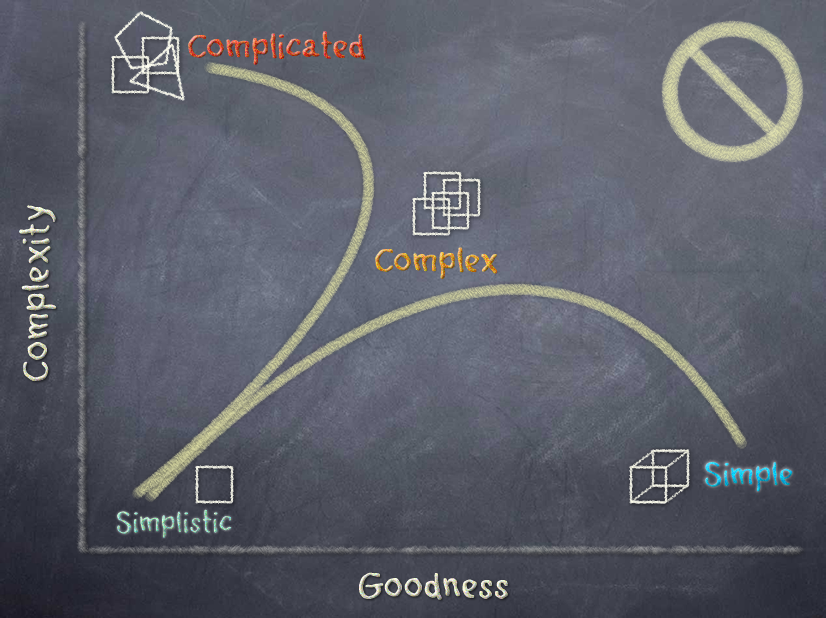
Simplicity Cycle update


I just came across this article by "R. Todd Stephens, PhD," which quotes rather extensively from my Simplicity Cycle manifesto. Too fun!

It was published in something called The Data Administrator's Newsletter (TDAN), which contains articles with titles like "Introducing Date Unification and Harmonization." Stuff I should probably be interested in, but strangely, I'm not. :)

27 July 2006

Word Length & Familiarity

I have a long-held, seldom-expressed theory about word length. It's just one of those crazy little things that bounces around in my head, and I wonder if there's any meaning to it.

Specifically, I suspect that familiar objects & activities generally get short words... and the more familiar, the shorter the word. While some very common objects & activies have longish words, I have not yet been able to think of a three letter word for something that is not familiar - can you? Check it out:

arm, leg, gut, eat, die, kid, sky, sun, run, see, hug, kiss (I count the double s as basically one letter), mom, dad, man, boy, dog, cat, cow, moon (see note on kiss)...

As an example of how words change, consider the Horseless Carriage, which became the automobile, and then became the Car. Or the computer becoming the PC (or Mac).

Why isn't water a three letter word? Why isn't "person" shorter? I don't know.

Anyway, I poked around online a little and came across this Ask Oxford site, which presents some data that seems to support my hypothesis... Most of the 100 most common English words are one syllable and in the 2-4 letter range...

24 July 2006

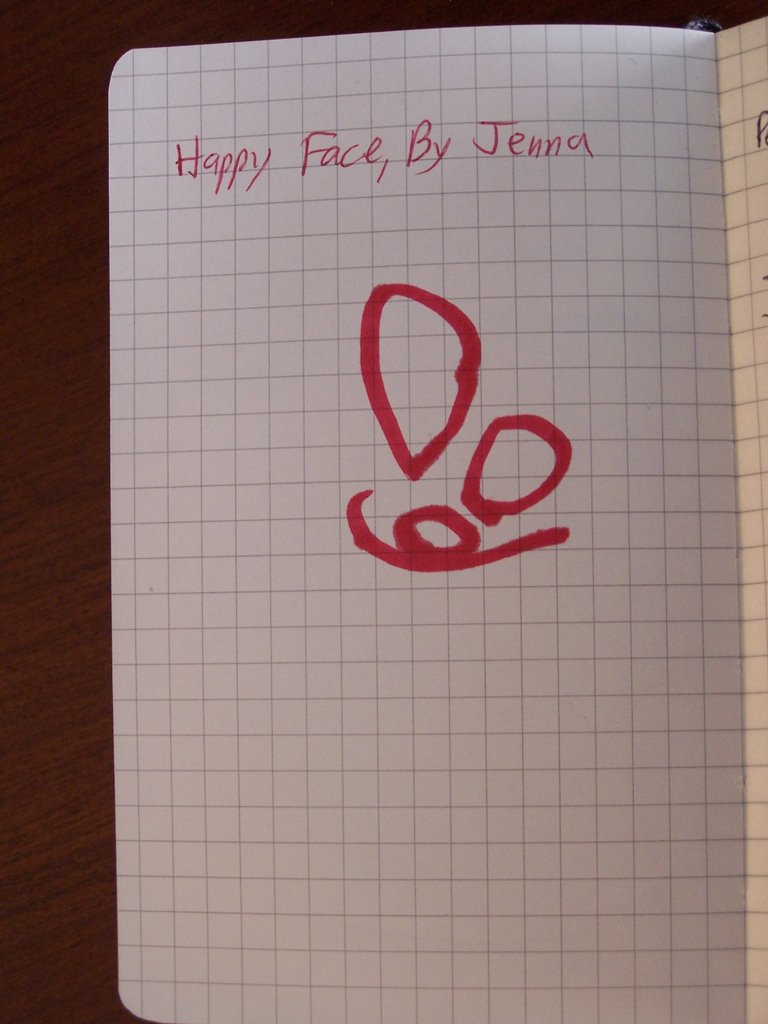
Happy Face


I carry a little black
moleskine notebook everywhere I go. I use it to capture notes, ideas, sketches, etc. If we've ever had a face-to-face conversation, you've probably seen me whip it out and scribble something down.

Anyway, I guess I left it sitting on the island in my kitchen one day, and sometime later came across this picture, compliments of my 3-year-old daughter Jenna:

She didn't scribble on any other pages - she just opened to a blank page and drew this happy little face. I think it's the coolest thing anyone has written in my notebook (myself included).

21 July 2006

One more Exposure comment

If anyone out there is actually reading this blog, you are probably getting bored with the Exposure book. Sorry about that, but I couldn't resist one more posting.

See, I just noticed that Exposure is offered under a Creative Commons license... specifically, an Attribution 2.0 License, which basically says people can do what ever they want with the content, as long as they attribute the work to the originators.

This includes commercial use.

If any of you creative-types out there are interested in 21st century intellectual property management options, please check out the Creative Commons site for the stuff you need.

Gary Larson's Intellectual Property

Ever since coming across the Exposure book, I've been thinking about the whole copyright & intellectual property issue. Actually, it's been on my mind for a while, probably ever since Napster first came out... and then again when I started writing books...

At any rate, I was looking for Far Side cartoons online and came across this crazy note from Gary Larson. I am reasonably certain it's legit, and he basically says "No, you can't put Far Sides online anywhere."

His note strikes me as remarkably dumb.

Doesn't he realize his fame & fortune are due in large part to countless people posting Far Side cartoons on office doors, cube walls, bulletin boards, etc? He got a lot of free advertising from his fans, and quickly became a cultural phenomenon. Now he doesn't want that to happen anymore? I'm not a cartoonist, but I have a hard time imaginging there is much "emotional cost to me, personally, of seeing my work collected, digitized and offered up in cyberspace beyond my control." That actually sounds like a good deal, particularly if you replace "beyond my control" with "without any effort on my part." It seems to me he should be saying Thanks, not Stop.

Today's doors and walls and bulletin boards are online - they're called webpages and blogs and MySpace. And Gary Larson apparently wants none of it.

How can he overlook the fact that the value of his ideas & cartoons increases with familiarity (to paraphrase Mr. Barlow's chapter in Exposure)?

If he wants or needs to stop drawing Far Side, fine (and I believe he stopped drawing them some time ago). He can still sell Greatest Hits collections, calendars, etc... but it is unreasonable, illogical and unwise to expect that he will still control the distribution of (and still profit by) stuff he produced 15 years ago.

It's a bit like an author objecting to used book stores, because he or she isn't getting a cut of the action.

It's a bit like a musician objecting to people humming their tunes within earshot of someone else...

It's a lot like the music industry, which has decided to treat fans like criminals.

And in this new digital world, it just doesn't make much sense.

17 July 2006

Information Sharing

I just received a (long!) email announcing the release of a report by "the Markle Foundation Task Force on National Security in the Information Age." Described as "a must read for all information sharing stake holders," I was intrigued (even though I'm not sure how much steak I hold...)

Even through the message had more buzzwords than a interactive collaboration of dynamic paradigm shifters, I read (ok, scanned) through it and clicked on a link or two. If I'm parsing the techno-speak correctly, I think they're the good guys. Here's a short excerpt...

...a group of over 50+ forward thinking leaders have been working together
to stand up such an Institute for Information Sharing
(IIS)...

Those interested in the Institute for
Information Sharing can find its charter, white papers, meeting notes, GSA
Schedules and related materials at
www.ICHnet.org on the right hand margin.
This is an open and non-partisan research institute that leverages lessons
learned from existing information sharing research, testing and implementation
efforts so as to accelerate the planning and architecture process.

With failure rates of major govt IT programs approaching 80%, costing the
tax payer $21.3 Billion a year, our country’s leadership can ill afford to
continue to engage the same processes that continue to lead to failure.

If you're a stakeholder, you might want to peruse the report.... Enjoy!

14 July 2006

The Change Function

I recently came across a book in the airport, titled The Change Function. Then I checked ChangeThis.com this morning, and found the manifesto version.

Very interesting ideas, particularly for anyone who's interested in injecting change and/or introducing disruptive, innovative technology into the market (military or commercial).

Don't miss it...

30 June 2006

Exposure Quotes

For those who haven't yet downloaded the Exposure PDF (or are too lazy or time-constrained to read the whole thing), here are a few quotes of interest:

(From John Perry Barlow’s chapter, titled “Selling Wine Without Bottles”)

…the rights of invention and authorship adhered to activities in the physical world. One didn’t get paid for ideas but for the ability to deliver them into reality. For all practical purposes, the value was in the conveyance and not the thought conveyed. In other words, the bottle was protected, not the wine.

The best way to protect intellectual property is to act on it.

Our intellectual property protection derives from our being the only real-time source of it.

Point of view is an asset which cannot be stolen or duplicated.

The central economic distinction between information and physical property is the ability of information to be transferred without leaving the possession of the original owner.

[for ideas], familiarity has more value than scarcity… the best thing you can do to raise the demand for your product is to give it away.

Exposure Recap

A group of very smart people got together in 2003. They had a conference, collected transcripts of the talks & papers, and put it all together into a book titled Exposure: From Friction to Freedom.

They printed it as a rather high-end hardcover book. Pricetag: $50. It sold out, and isn't available for purchase anymore.

However, the PDF is available (for free). Turns out, they were charging for the book, not the words. The paper, not the ideas. The Form, not the Function. John Perry Barlow explores this idea with great clarity in the chapter titled Selling Wine Without Bottles.

Now it's 2006. Along comes some guy (me) who wants to help spread the ideas in Exposure (more on those ideas shortly). With the blessing of a former lyricist for the Greatful Dead (who happens to be a brilliant technology writer as well), I uploaded it to Lulu.com and am now selling it for $8 [full disclosure: I make 68 cents on every copy sold].

Yes, you can still download it Now & for Free. You can also get it in hardcopy Next Week for $8. Or you can Wait Forever for the $50 version (which no longer exists).

Options are very good... Power to the people!

29 June 2006

Some More Cool Quotes

"Whatever you think, think the opposite" - Paul Arden (Thanks Cecil Hook)

"Law, Medicine, Engineering, Arcitecture....all have higher, transcedant purposes. Business is no different, they just don't know it yet."
- John Mackey, Whole Foods Market

And from our friend, Tom Peters latest presentation:

“A focus on cost-cutting and efficiency has helped many organizations weather the downturn, but this approach will ultimately render them obsolete. Only the constant pursuit of innovation can ensure long-term success.” —Daniel Muzyka, Dean, Sauder School of Business, Univ of British Columbia (FT/09.17.04)


“You can’t behave in a calm, rational manner. You’ve got to be out there on
the lunatic fringe.”
—Jack Welch


“The role of the Director is to create a space where the actor or actress can become more than they’ve ever been before, more than they’ve dreamed of being.” —Robert Altman, Oscar acceptance

-Gabe

27 June 2006

Learn This Word!

Apophenia: the experience of seeing patterns or connections in random or meaningless data. (ala John Nash in A Beautiful Mind)

Klaus Conrad coined the term and defined it as the "unmotivated seeing of connections" accompanied by a "specific experience of an abnormal meaningfulness".

He originally described it in relation to the distortion of reality present in psychosis, but it has become more widely used to describe this tendency in healthy individuals without necessarily implying the presence of neurological or mental illness.

In statistics, apophenia would be classed as a Type II error (false alarm).
(from the Wikipedia entry for Apophenia)


Here's the reason I think it's an important word / concept / idea / phenomenon: It has been suggested that apophenia is a link between psychosis and creativity.

The other reason this word matters: we are in an age when pattern recognition is more important than ever...

26 June 2006

Blogging In Spurts

I seem to blog in spurts. I don't know why.

I don't think it's good or bad. It's just the rhythm I seem to be in...

Exposure book

I recently came across a fascinating book titled Exposure. It's all about intellectual property issues, and you can download the PDF version for free. I can't recommend it strongly enough, for anyone who is interested in thinking about the role of ideas in the digital age.

It's about creativity, compensation, video games, music, writing, morality and the electronic frontier. John Perry Barlow, former songwriter for the Greatful Dead and co-founder of the Electronic Frontier Foundation (!) is the latest addition to my list of favorite people. His article about "Selling Wine Without Bottles" is brilliant & tremendously thoughtprovoking.

Sadly, the book is sold out. However, as I said, you can download the PDF. You could then upload it to Lulu.com and (for about $8) print a hardcopy for yourself.

Question: What if I uploaded the PDF to Lulu and made hardcopies available for sale to the public? Would it be morally acceptable for me to make a profit on the sale? Would I be obliged to share those profits with the authors who contributed to the book? What if I had a website that said "Click here to get it for free from the original source... or click here to buy a hardcopy from me..."?

Any thoughts?

Never Let Family "Interfere" With Work

For many years now, I have been absolutely committed to living out my belief that family should never interfere with my work. It is only recently I've put that concept in those terms.

Here's what I mean: I work in order to provide for my family. So, when my family's needs conflict with work, family wins... and I don't call it interference, no matter the impact on my work-related plans for the day.

For example, when I'm about to walk out the door & go to work and my daughter shows up asking for breakfast (awake 30 minutes early!) ... I don't tell her to go away. I put my stuff down, feed her, and gladly accept the fact that I'll be a bit late today.

She is not getting in my way. Not even a little. She is not an inconvenience or an interference. She is three years old and she's hungry. Feeding her and giving her a little cuddle is way more important than getting to work at a particular time.

If I don't understand that, if I don't recognize the value & importance of being there and taking care of her, shame on me.

This isn't about indulging a 3-year-old's every whim (which is a tremendously bad idea, by the way). It's about recognizing what really matters.

When work and family conflict, and something has to give, I don't want it to be the family that suffers. And when work gets moved to the back burner, I don't call it "interference." I call it "a good decision."

From "The Adventurer" by Paul Zweig

"Men, it would seem, are worth talking about only when the pattern of their life is broken."

(The Adventurer, by Paul Zweig - amazing book. Please read it!)

02 June 2006

Interactive Access

For the past few months, I've been watching a very interesting trend emerge. I call it "Interactive Access," and plan to do some serious writing about it shortly.

Here's the thing - thanks to Google, online banking, Amazon.com, etc... access to all the world's data is basically a present reality. Obviously, some types of data are easier to locate than others, but generally speaking we currently have the ability to locate any piece of information we are searching for.

So, I contend that Access is not really a trend. It's already here, and while it will continue to grow & mature, it's basically yesterday's news.

Interactive Access, on the other hand, is all about the ability to manipulate the data we find. Wikipedia is a great example, because it enables users to add, delete, correct, correlate, expand and generally do stuff with the info. Google Map mashups let people aggregate data from a variety of sources and create interesting new information products. Ancient Spaces lets users contribute to & manipulate a 3-D representation of the ancient world. The list goes on.

Finding data is no longer enough. Interacting with that data, correcting it and adding to it, putting it together in new ways... that is a trend with some very cool implications.

More to follow...